
The Mercedes-Benz C63 AMG was built in Germany in 2012, previously registered in Dubai and already in the Netherlands by the time the owner approached us. Which part of that history mattered most? For the French temporary registration application, we needed to show how the documents connected this particular car to the applicant. The place of manufacture alone could not answer that question.
What the Dubai documents told us
We started with the Dubai export certificate, the purchase invoice and the available Dutch customs paperwork. Each answered a different question. The export certificate documented the car’s departure from Dubai. The invoice identified the purchase. The customs record concerned the import into the Netherlands. We checked these alongside the applicant’s identification and business documents, then assembled the material for our French registration partner.
One practical difficulty was an old customs copy that was hard to read. We kept it exactly as supplied. Alongside it we sent an enlarged copy with better contrast and a note explaining the difference. A reviewer could consult the original and see which details were legible. We left unreadable entries as they were.
Why we asked about type approval separately
We also asked a specialist whether European type-approval documentation was available for this particular Mercedes. Knowing the model and factory location was a starting point. The outstanding question concerned the actual vehicle. This mattered because the owner’s immediate request for temporary registration and the requirements for permanent registration were two separate issues.
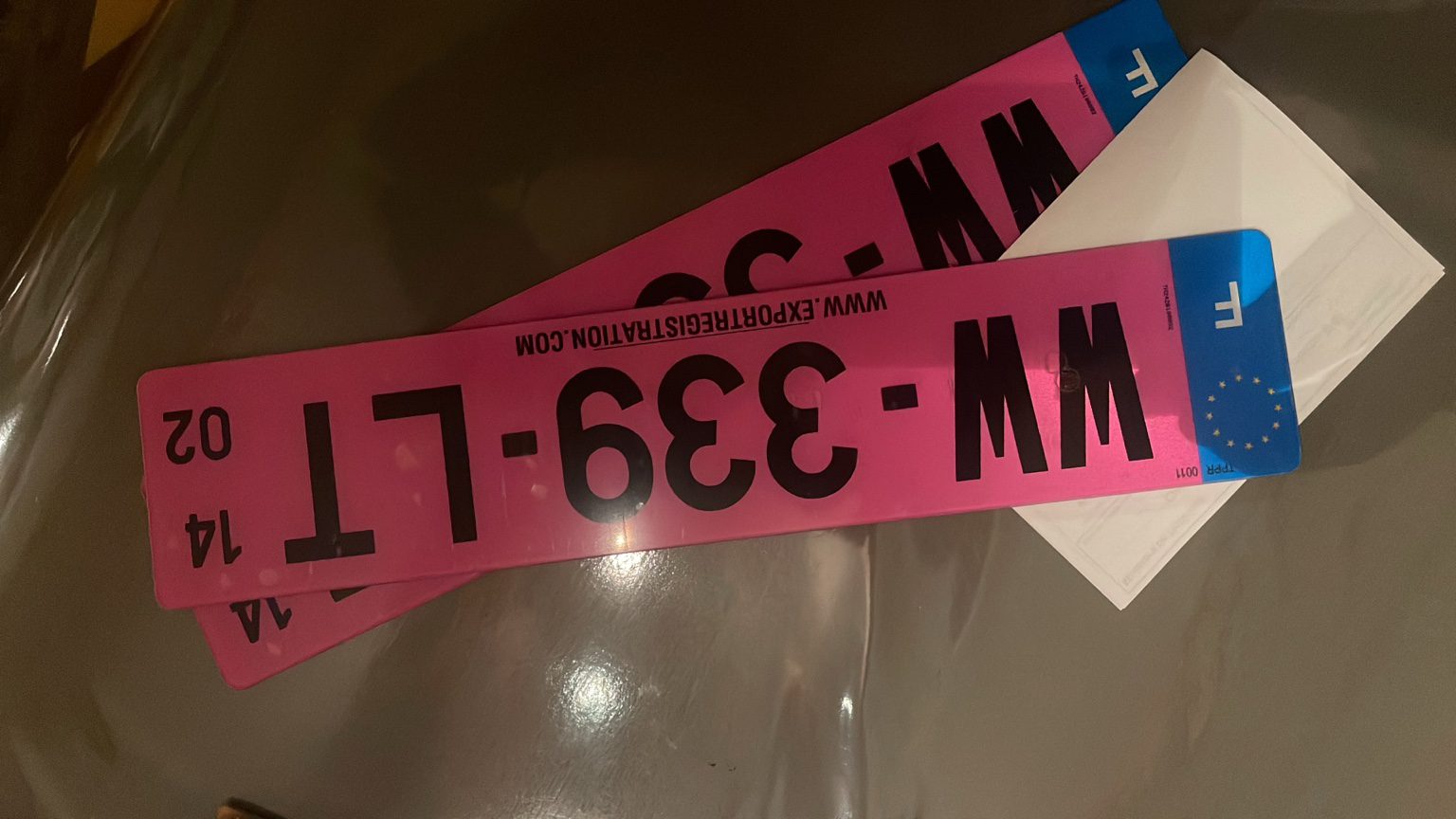
On 28 October we sent the available paperwork to our French partner for a provisional WW registration certificate, known as a CPI WW. On 29 October the partner sent an acknowledgement. For someone preparing a similar application, the most useful first step is to lay out the car’s history in order: previous registration, export, purchase, import and present location. Tell us which records you have for each stage. We can then assess the available route for your vehicle.
Reconstruct the history of the actual car
The paperwork for a used car rarely arrives in a single folder. The seller has the invoice, the importer has the customs papers and there may still be an old registration document in the glovebox. Three countries featured in the history of this Mercedes. It had been built in Germany, registered in the United Arab Emirates and brought into the Netherlands. Describing it simply as a German Mercedes would leave a reviewer wondering why the file contained an export certificate from Dubai. A short timeline makes those connections much easier to follow.
One way to start is to make four columns on a sheet of paper. For each document, write down who issued it, which vehicle it concerns, which event it records and what remains unclear. On the invoice, for example, check the relationship between buyer and seller. On the export certificate, look for the details that identify the car. If a character is hard to read, record the uncertainty. You now have a specific question to put to the seller or the person who issued the document.
What our French partner needed to establish
A business was applying in this case. That meant there was a question about who was acting on the company’s behalf as well as a question about the vehicle itself. Our French partner asked for clarification about the company stamp on the mandate. A sharper image of the car’s identification number would do nothing to resolve a question about a signature. We therefore kept the company records, the mandate and the vehicle documents clearly distinguishable when preparing our response.
The available material went to the partner in three readable PDF files. One included the old customs copy, the more readable version and the explanation of how the two related. That distinction matters when someone reviewing an application remotely has to determine whether a faint character was actually present in the original. Anyone scanning documents at home can take a similar approach. Keep the whole sheet in the frame, include the reverse if it contains information and save the original file separately.
What to ask the seller before you collect
Find out which purchase and export documents come with the car and who can help later if a page is missing. If a reference on an old copy is difficult to make out, ask whether the issuer can supply a clearer copy. Also tell us what you need the registration for. Preparing to move the vehicle temporarily and obtaining permanent registration where you live are separate jobs. A reviewer needs to know which of those questions you are asking before deciding what to examine.
Read our guide to temporary registration for vehicles from outside the EU.
RDW guidance on approval for imported vehicles.
Start your export registration application.
Frequently asked questions about a car from Dubai
Give both the country of manufacture and the country of previous registration if you know them. Add the car’s current location. For the C63, this explained why details of a German-built vehicle, an export certificate from Dubai and Dutch customs papers all belonged in one file. If part of the history is uncertain, identify the gap so it can be investigated.
You can ask us to assess what is visible on the copy you have. Use the agreed channel to supply the complete, unaltered document and identify the area that is difficult to read. Whether the reviewer can proceed or needs another record depends on the individual file. For this Mercedes, we explained precisely which historical copy was available.
The reviewer needs to understand the connection between the applicant, the person signing and the application. Before submitting business documents, establish who is named on the invoice and who signs on behalf of the buyer. If different people handle those roles, tell us at the start. A follow-up question about authority can then reach the person who can answer it.
Collect any technical documents that belong to this specific vehicle. The vehicle details can be used to enquire what supporting records are available, as we did separately for the Mercedes. For the Dutch procedure, the RDW explains how it assesses imported vehicles that lack European or national type approval and what an individual assessment means.
Agree which confirmation you are waiting for. An acknowledgement tells you the file has reached the recipient. To plan a particular drive, establish which registration has been issued, what documents are available and whether your insurer covers the journey. Tell us about any proposed collection date at the outset so that everyone understands how much flexibility the arrangement allows.
 English
 Dutch
 German
 French
 Serbian
 Portuguese
 Ukrainian
 Polish
 Romanian
 Spanish
 Italian